Vinos
The Man Who LaughsVinos is a young gypsy woman in the Green Box troupe, where she and Fibi serve as attendants and help maintain the company’s shared life on the road. Her place in the troupe is modest but concrete: alongside the public spectacle of its performances, she performs the domestic work that makes its traveling household possible.
Identity and Place in the Troupe
Ursus picks up Vinos and Fibi from among the vagabonds of cities and suburbs. Both are described as young and ugly, and Ursus gives them their names: Venus and Phoebe. To conform to English pronunciation, the narrative renders those names as Vinos and Fibi. The distinction between the original forms and their adapted spellings marks the practical reshaping of names within this traveling company.
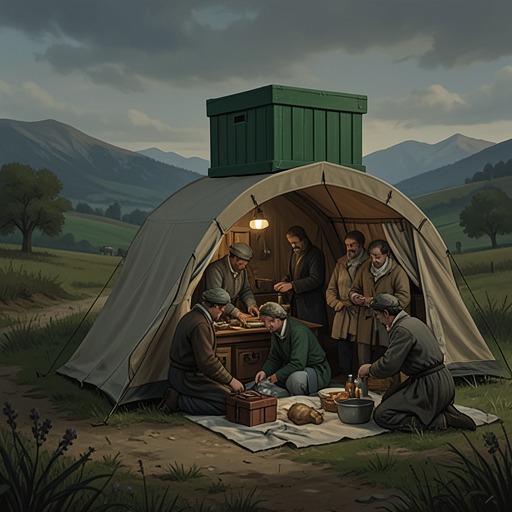
The women join Ursus, Homo, Gwynplaine, and Dea, enlarging the group that travels in a caravan large enough to carry a theatre. Ursus describes the company as a wandering temple, and the narrative calls the two women its goddesses as well as its servants. This elevated, mythological description sits alongside the plain fact of their work: the troupe’s theatrical identity depends on people who tend to its everyday needs.
Work and Daily Life
Vinos’s specific task is scrubbing the troupe’s caravan, which Ursus imagines as a temple. Fibi cooks; the division of their work is stated plainly, setting Vinos’s cleaning alongside the cooking that sustains the company. On performance days, Vinos and Fibi also dress Dea. Their labor therefore connects the private routines of the traveling household with the preparation of its public appearance.
The narrative gives a glimpse of the group’s shared domestic rhythm. Vinos and Fibi take part in the repast with the others, though they give little trouble, and speak to one another in the gypsy language. Afterward, Vinos goes with Fibi and Dea into the women’s apartment. At midnight the company is asleep, apart from the wolf, and the next morning they meet again for breakfast. These details place Vinos within an ongoing communal routine rather than presenting her only as a name attached to a single task.
Costume and Performance
For performances, Vinos wears, like Fibi, a Florentine petticoat of flowered fabric and a sleeveless woman’s jacket that leaves the arms bare. The description sets their clothing beside the different garments worn by Ursus and Gwynplaine, giving the troupe a visible, differentiated stage identity. Vinos’s documented contribution remains preparation and service rather than a specified act onstage: she helps dress Dea and participates in the company whose public life depends on its performances.
That contrast between spectacle and maintenance defines the limited but meaningful place the narrative gives Vinos. The Green Box troupe appears as a traveling theatre, yet it is also a household with meals, sleeping arrangements, cleaning, and care. Vinos’s work belongs to that less visible foundation. The text does not trace a separate plot or later fate for her; it records her as part of the company’s shared life and the practical labor behind its public shows.